Frank Spinola
Source: L'Espresso
Hundreds of corpses. Women and men who tried to escape but died at sea. And the waves carried them to shore. In the chaos of the North African country, the horror is now plain for all
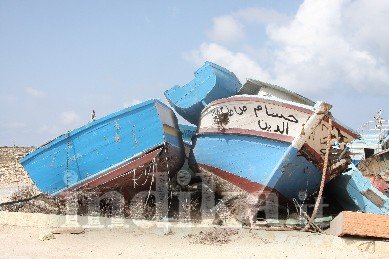
(February 21, 2011) With the onslaught of mass Lampedusa in the Mediterranean Sea returned to swallow bodies. The lucky ones, about 4 000 in 4 days, they made it. Others have followed the same fate of those thousands of men and women who over the years, trying to conquer Europe by sea, drowned. The latter are dead on 12 February, when a boat load of immigrants sank in the waters off Girgis, in Tunisia, where a young man drowned and one was missing and 13 February when, after a spur of a Tunisian patrol boat, a barge sank by 29 dead. They are also "victims of the border" and is additional to that over the years have transformed the Mediterranean into a huge cemetery in the open.
The worst shipwrecks have been recorded in the Strait of Sicily, particularly in Libyan territorial waters. It was thought that it was the sea to keep most of the corpses. But, thanks to the contribution of numerous witnesses, another truth emerges that the government of Colonel Muhammar Gheddafi ha cercato di occultare. A causa del flusso delle correnti, molti corpi vengono rigettati sulle spiagge libiche: negli ultimi dieci anni ne sono stati recuperati circa 1.500 di cui almeno 500 seppelliti in un cimitero non islamico di Tripoli conosciuto con il nome storico di "Hammangi" e circa 800 sono ancora in attesa di riconoscimento negli obitori della città.
Una vicenda tenuta segreta da un regime che si rifiuta di riconoscere la presenza di rifugiati nel Paese e sostiene che esistono solo immigrati clandestini, dunque irregolari. È appena stata varata una legge per punire il traffico di migranti ma che non fornisce loro nessuna protezione.
Ad Hammangi, fra l'area italiana and the Anglo-Saxon, in a strip of no man's land managed by the "shaba" (the district), the Libyan government, which leads some of the Africans found dead in the desert ("In total around 1,500 a year," said IOM International Organization for Migration) and the bodies of illegal African immigrants rejected by the waves on beaches.
It is mostly found in the corpses of Tripoli, in the areas of Janzur, Gargaresch, Suk Juma, Abuslim, Taruna, judging from what we read on small stones above the graves in concrete. "When you bury them, there is always an official from the prosecutor that card in hand, the death certificate and burial, shall be present the ceremony, "says an employee of the district." Everything is recorded, the date and place of occurrence, the alleged reason of death, the time spent in the morgue and finally the date siltation, "says Bruno Dalmasso, Italian always Libya, which was involved in the redevelopment of the Italian section of Hammangi.
Even a young policeman External Relations Office who prefers to remain anonymous confirmed the procedure and said that "everything happens at the expense of the Libyan government. The bodies are buried at Hammangi because it is presumed that these people are of other religions: Catholic, Orthodox, Anglican. Non-Muslims can not be buried with Muslims, così a volte per capire l'appartenenza religiosa si guarda alla circoncisione".
"Sono tutti senza documenti", spiega sbrigativo un altro funzionario governativo che nel passato era distaccato alla sicurezza dell'obitorio del Tripoli Medical Center. "Portano con sé solo qualche foto tessera nel caso trovino come regolarizzarsi. L'Obitorio è così pieno di cadaveri che non c'è posto per i nostri morti. Per legge li dobbiamo tenere circa tre anni in frigo così da rendere possibili eventuali riconoscimenti". Lo spettacolo che descrive è raccapricciante: "I corpi rigettati dal mare sono mangiati dai pesci. Ne ho visti alcuni senza piedi, altri senza faccia, uno aveva metà del corpo, un altro lower limbs trimmed from the meat. "
In 2007, Sister Sheryl, a nun of the Church of San Francesco in Dahar, entered the morgue of the Tripoli Medical Center to accompany a clandestine search of her husband. Remember now:" Do not I could not sleep for a week. The bodies were everywhere and the sea was swollen and disfigured them. They were there for at least two years. "


0 comments:
Post a Comment